 Shopify Migration



Magento, now known as Adobe Commerce, is one of the most powerful eCommerce platforms available. Its flexibility allows businesses to build highly customized and scalable stores—but this flexibility often leads to rising costs.
For many businesses, the magento ecommerce store cost becomes a major concern over time—not just during development, but across maintenance, optimization, and scaling.
The goal is not to cut costs blindly.
The goal is to optimize cost while increasing efficiency, performance, and ROI.
Understanding Where Magento Costs Come From
Before reducing costs, you need clarity on where they originate.
Development Costs
Magento development requires skilled developers who understand complex architecture, integrations, and customization layers. Because of this, development hours tend to be significantly higher compared to simpler platforms.
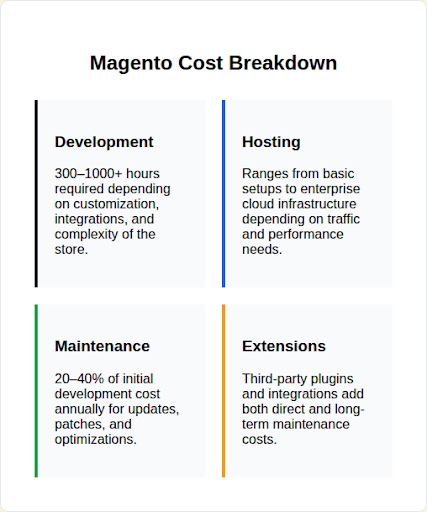
On average, Magento projects can require anywhere between 300 to 1000+ development hours, depending on complexity, which directly increases cost.
Infrastructure and Hosting
Magento is resource-heavy and requires robust hosting environments to perform efficiently. Unlike lightweight platforms, it cannot run optimally on basic hosting setups.
Businesses often end up overpaying for infrastructure due to poor planning or lack of scalability strategies.
Maintenance and Ongoing Updates
Magento requires continuous monitoring, updates, and security patches. Ignoring these can lead to performance issues or vulnerabilities.
Statistically, businesses spend 20–40% of their initial development cost annually just on maintenance.
Extensions and Integrations
While Magento has a rich ecosystem, many functionalities rely on third-party extensions, which can add both direct costs and indirect maintenance overhead.
Read More : Launch Your Online Store: Complete E-commerce Guide
Why Magento Development Costs Escalate
Even well-funded projects can go out of budget due to inefficiencies.
- Over-customization often leads to unnecessary complexity, increasing both development and maintenance costs.
- Poor planning results in repeated changes, rework, and extended timelines.
- Lack of performance optimization early on leads to higher costs later during debugging and fixes.
Industry Insight:
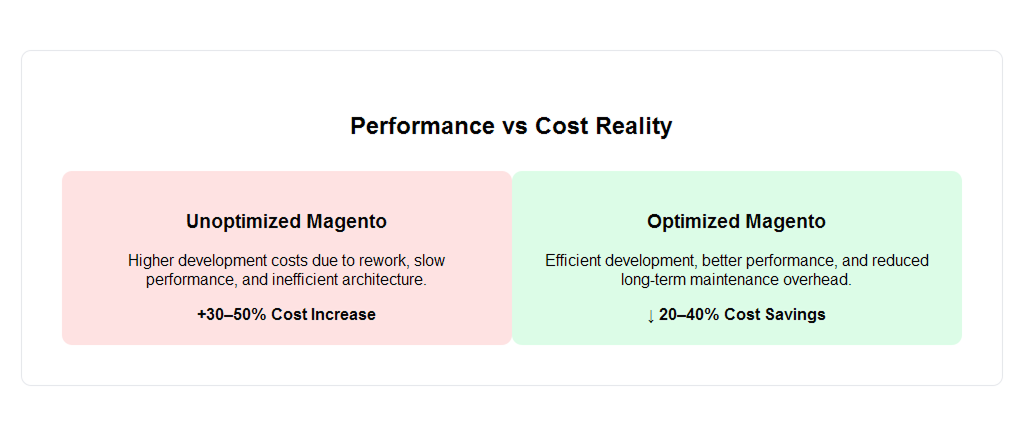
Magento projects without structured optimization strategies can see cost increases of 30–50% over time.
Strategies to Reduce Magento / Adobe Commerce Development Cost
Now let’s break down practical, descriptive, and actionable strategies.
1. Define a Clear Scope Before Development Begins
Many businesses jump into development without fully defining their requirements, which leads to constant changes mid-project. These changes significantly increase developer hours and delay timelines.
A clearly defined scope allows teams to focus only on essential features, avoiding unnecessary development work.
What you should do:
- Document all required features, integrations, and workflows in detail.
- Separate critical features from optional enhancements to prioritize effectively.
- Plan development in phases instead of building everything at once.
Impact:
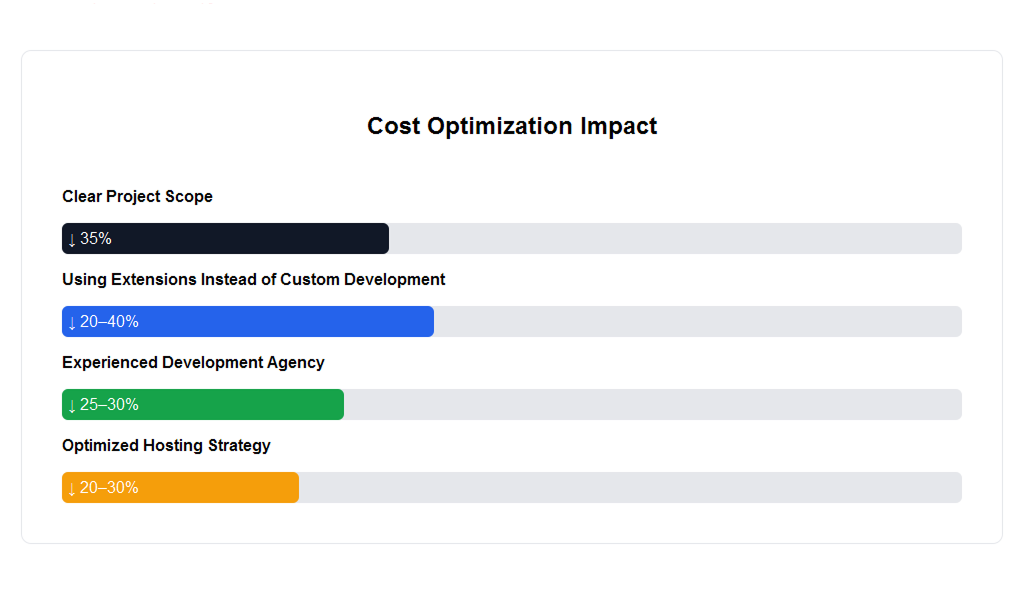
A well-defined scope can reduce development overruns by up to 35%, making it one of the most effective cost-control strategies.
2. Avoid Unnecessary Custom Development
Magento’s flexibility often encourages businesses to build everything from scratch, even when pre-built solutions already exist.
Custom development increases not only initial cost but also long-term maintenance complexity.
What you should do:
- Use reliable extensions for standard functionalities such as payment gateways, shipping, and analytics.
- Reserve custom development only for features that directly impact your competitive advantage.
Impact:
Using optimized extensions instead of building custom features can reduce development costs by 20–40%.
3. Work With an Experienced Magento Development Agency
Choosing the wrong development partner is one of the most expensive mistakes businesses make. Inexperienced teams often take longer, introduce errors, and require rework.
A skilled magento development agency follows structured processes, reducing inefficiencies.
What you should look for:
- Proven experience in Magento and Adobe Commerce projects.
- A performance-first approach rather than just feature delivery.
- Strong understanding of scalability and cost optimization.
Impact:
An experienced agency can reduce development time by 25–30%, directly lowering overall cost.
4. Optimize Frontend Development with Modern Frameworks
Traditional Magento themes like Luma rely heavily on outdated technologies, increasing complexity and development effort.
Modern frameworks like Hyvä Themes simplify frontend architecture.
What you should do:
- Transition to lightweight frontend frameworks that reduce dependency on heavy scripts.
- Focus on clean, minimal frontend builds to improve both performance and development speed.
Impact:
Frontend optimization can reduce complexity by up to 60–70%, lowering both development and maintenance costs.
5. Reduce Dependency on Multiple Extensions
While Magento Extensions add functionality, too many of them can create conflicts, slow performance, and increase debugging time.
Each additional extension adds another layer of dependency and maintenance.
What you should do:
- Conduct regular audits to identify unused or redundant extensions.
- Replace heavy or poorly optimized plugins with lightweight alternatives.
Impact:
Reducing extension overload can decrease maintenance effort by 25% or more.
6. Invest in Performance Optimization Early
Many businesses treat performance optimization as a post-launch activity, which makes it more expensive to fix later.
Slow performance directly impacts both revenue and user experience.
What you should do:
- Optimize images, scripts, and server responses during development itself.
- Implement caching and performance best practices from day one.
Stat Insight:
A 1-second delay in page load can reduce conversions by up to 7%, making performance directly tied to revenue.
7. Automate Repetitive Processes
Manual operations such as order processing, inventory updates, and marketing workflows increase operational costs over time.
Automation reduces dependency on manual intervention and improves efficiency.
What you should do:
- Automate backend workflows wherever possible.
- Integrate tools that reduce repetitive manual tasks.
Impact:
Automation can reduce operational workload by 30–50%, leading to long-term cost savings.
8. Optimize Infrastructure and Hosting Strategy
Many businesses overspend on hosting by choosing high-end infrastructure without understanding actual requirements.
Poor hosting decisions can either increase costs or negatively impact performance.
What you should do:
- Start with scalable hosting solutions that grow with your business.
- Monitor performance and upgrade only when necessary.
Impact:
A well-optimized hosting strategy can reduce infrastructure costs by 20–30%.
9. Conduct Regular Code Audits and Optimization
Over time, Magento stores accumulate inefficient or outdated code, which increases maintenance complexity.
Ignoring code optimization leads to performance issues and higher costs.
What you should do:
- Schedule periodic code audits to identify inefficiencies.
- Refactor and clean up unnecessary code.
Impact:
Regular optimization reduces long-term maintenance costs and improves performance stability.
10. Partner With a Performance-Focused Ecommerce Development Company
Not all agencies focus on cost efficiency. Many focus only on delivering features without optimizing long-term impact.
A strategic ecommerce development company focuses on building systems that are efficient, scalable, and cost-effective.
What this means for your business:
- Lower development and maintenance costs over time.
- Better performance and higher ROI.
- Faster execution with fewer errors.
Read More : Best Magento Performance Partners for Growing eCommerce Brands
How VDCstore Helps You Reduce Magento Costs
At VDCstore, we approach Magento development with a performance-first and cost-optimized mindset.
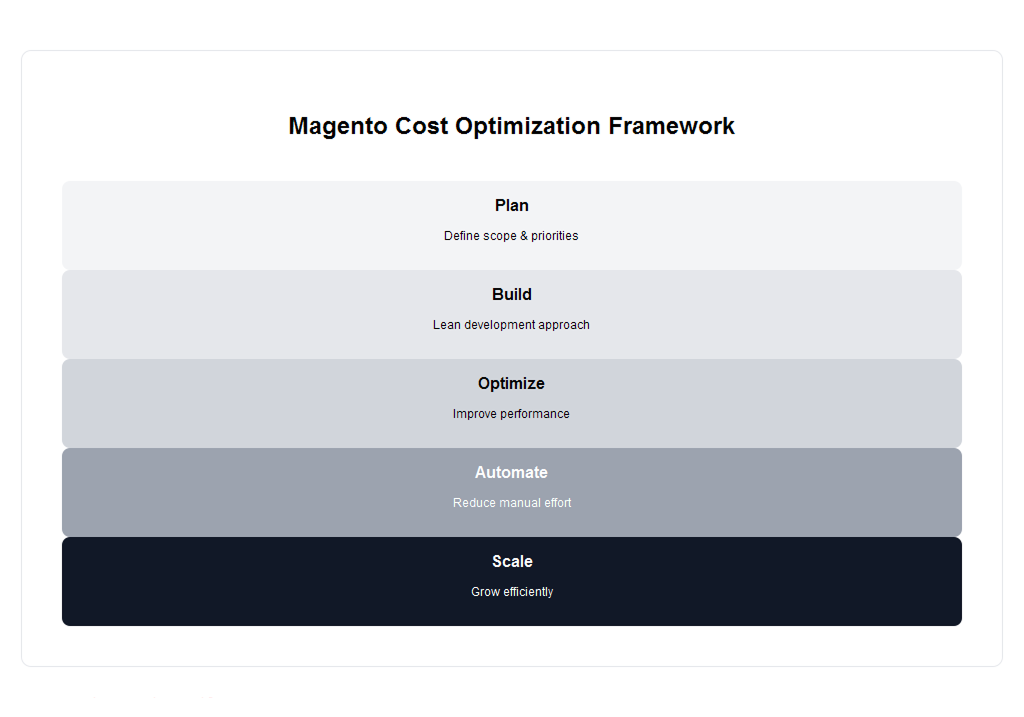
Our approach includes:
- Detailed planning and architecture design to eliminate unnecessary development effort
- Lean development processes that reduce time and cost without compromising quality
- Performance-focused builds that improve speed and conversions
- Extension and code optimization to reduce long-term maintenance overhead
- Expertise in modern frontend solutions like Hyvä to simplify development
Final Thoughts
Reducing magento ecommerce store cost is not about cutting features—it’s about making smarter decisions.
When businesses:
- Plan effectively
- Avoid unnecessary customization
- Optimize performance early
- Work with the right magento development agency
They don’t just reduce costs—they build a stronger, more scalable eCommerce system.
The bottom line:
Cost efficiency in Magento comes from strategy, not shortcuts.
And with the right ecommerce development company like VDCstore, you can achieve both lower costs and higher performance at the same time.







0 Comment(s)