 Shopify Migration



As eCommerce businesses evolve, many are re-evaluating their technology stack to stay competitive, agile, and cost-efficient. One of the most significant shifts in recent years has been the move from Magento (Adobe Commerce) to Shopify.
Shopify now powers millions of businesses globally and continues to grow rapidly due to its simplicity and scalability. This shift reflects a broader industry movement toward platforms that enable faster execution and lower operational complexity.
A well-executed magento to shopify migration is not just a platform change—it’s a strategic upgrade that can improve performance, reduce operational costs, and unlock faster growth.
In this guide, we’ll explore how to successfully migrate magento to shopify, along with the challenges, process, and how VDCstore helps you execute it seamlessly.
Why Businesses Are Moving from Magento to Shopify
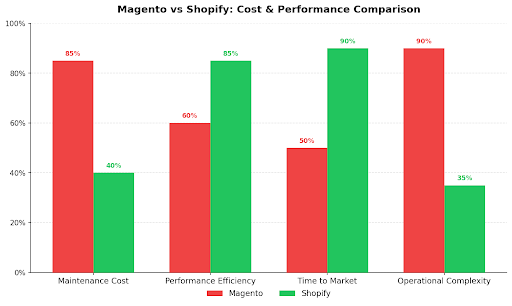
Magento has long been a powerful and flexible platform, especially for enterprise-level businesses. However, its complexity often becomes a bottleneck as businesses scale.
Common Challenges with Magento
Their responsibilities include:
- High development and maintenance costs: Magento requires ongoing developer involvement for updates, feature additions, and troubleshooting, which significantly increases long-term operational expenses.
- Heavy reliance on technical resources: Even small changes such as content updates or UI tweaks often require developer support, slowing down execution and increasing dependency.
- Complex backend and infrastructure requirements: Managing servers, hosting environments, and performance optimization adds an additional layer of complexity that most growing businesses want to avoid.
- Performance issues without constant optimization: Magento stores can become slow if not continuously optimized, directly impacting user experience and conversion rates.
- Frequent security patches and upgrades: Regular updates are necessary to maintain security and compliance, but they also require time, expertise, and cost.
Key Insight:
Businesses using legacy systems often spend 20–40% more on maintenance, making it harder to scale efficiently.
Read More: Launch Your Online Store: Complete E-commerce Guide
Why Shopify Is the Preferred Alternative
Shopify offers a modern, fully hosted eCommerce platform designed to eliminate complexity and improve efficiency.
Key Advantages of Shopify
- No server or infrastructure management required: Shopify handles hosting, security, and maintenance, allowing businesses to focus entirely on growth rather than technical operations.
- Faster time-to-market for new features and updates: Businesses can launch campaigns, products, and changes quickly without going through lengthy development cycles.
- Lower total cost of ownership over time: With fewer technical dependencies and predictable pricing, Shopify reduces both direct and hidden costs.
- Built-in security and automatic updates: Security patches, compliance updates, and platform improvements are handled automatically, reducing risk and effort.
- Extensive app ecosystem for added functionality: Shopify provides access to thousands of apps that allow businesses to extend functionality without custom development.
- Optimized performance and reliability out of the box: Shopify stores are built for speed, which improves user experience and directly impacts conversion rates.
Performance Insight:
Even a 1-second delay in load time can reduce conversions by up to 7%, making performance a critical factor in revenue growth.
What Is Magento to Shopify Migration?
A Magento to Shopify Migration Servicesinvolves transferring your complete eCommerce ecosystem from Magento to Shopify while improving efficiency and performance.
This includes:
- Product data migration: Transferring all product-related information such as descriptions, SKUs, images, and attributes while maintaining structure and accuracy.
- Customer information migration: Moving customer profiles, purchase history, and contact details to ensure continuity in user experience and retention strategies.
- Order history migration: Preserving past transactions for reporting, analytics, and customer service purposes.
- Content migration: Transferring CMS pages, blog posts, and SEO metadata to maintain your content strategy and search visibility.
- Design and user experience improvements: Rebuilding your store design within Shopify while enhancing usability and conversion-focused elements.
- Integrations and functionality setup: Ensuring all third-party tools, payment gateways, and workflows are properly configured in the new environment.
It’s not just a migration—it’s a chance to rebuild your store for better performance.
Key Components of Magento to Shopify Migration
1. Product Data Migration
Product data is the foundation of your store, and it must be transferred accurately. This includes maintaining category structures, product variations, pricing rules, and media assets so that the catalog remains organized and functional after migration.
2. Customer Data Migration
Customer data must be securely transferred while preserving purchase history and account details. This ensures that returning customers have a seamless experience and businesses can continue personalized marketing efforts without disruption.
3. Order Data Migration
Migrating order history is essential for maintaining financial records, analytics, and customer support continuity. It ensures that past transactions remain accessible and usable within the new system.
4. Content Migration
All content elements, including landing pages, blogs, and SEO metadata, must be migrated carefully to retain search rankings and maintain brand consistency across the new platform.
5. Design & UX Transition
Magento themes cannot be directly transferred, so the store must be redesigned or adapted using Shopify themes. This step is also an opportunity to improve navigation, mobile responsiveness, and overall user experience.
Conversion Insight:
Improved UX alone can increase conversions by up to 200%, making this a critical step.
Magento to Shopify Migration Process (Step-by-Step)
Step 1: Audit and Planning
A detailed audit of your Magento store is conducted to understand its structure, dependencies, and challenges. This helps define a clear migration strategy and ensures nothing critical is overlooked.
Step 2: Data Mapping
All Magento data fields are mapped to Shopify’s structure. This step ensures that product attributes, customer details, and order data are transferred accurately without loss or mismatch.
Step 3: Shopify Store Setup
The Shopify environment is configured, including theme selection, payment gateways, shipping rules, and essential settings required to run the store efficiently.
Step 4: Data Migration Execution
All data is transferred systematically while validating accuracy at each stage. Any inconsistencies are identified and resolved to ensure a clean migration.
Step 5: SEO Preservation
SEO elements such as URLs, metadata, and redirects are implemented to ensure that search rankings are maintained and traffic loss is minimized.
Step 6: Testing and Quality Assurance
Comprehensive testing is conducted across all aspects of the store, including product pages, checkout flows, mobile responsiveness, and integrations to ensure everything functions correctly.
Step 7: Launch and Post-Migration Support
Once the store goes live, performance is monitored closely. Any issues are resolved quickly, and further optimizations are implemented to improve results.
Magento to Shopify Plus Migration Services
For high-growth businesses, magento to shopify plus migration services provide additional capabilities.
Why Shopify Plus?
- Advanced automation tools: Shopify Plus allows businesses to automate workflows, reducing manual effort and improving efficiency.
- Scalability for high-volume operations: It supports large catalogs and high traffic without performance issues, making it ideal for enterprise businesses.
- Custom checkout experiences: Businesses can optimize checkout flows to improve conversions and reduce cart abandonment.
- Dedicated support and resources: Shopify Plus provides priority support and strategic guidance for scaling brands.
- Global performance optimization: It enables better handling of international markets, currencies, and localized experiences.
Enterprise Insight:
Businesses using optimized enterprise platforms can scale 30–50% faster compared to traditional systems.
Challenges in Magento to Shopify Migration
- Data integrity risks: Incorrect data mapping can lead to missing or corrupted information, affecting store functionality and user experience.
- SEO risks: Without proper redirects and optimization, businesses can lose significant organic traffic after migration.
- Feature differences between platforms: Magento’s custom features may not have direct equivalents in Shopify, requiring strategic adaptation.
- Complex integrations: Third-party tools and systems must be reconfigured or rebuilt to function properly in Shopify.
This is why working with Magento to shopify migration agencies like VDCstore is critical.
Why You Should Hire Magento to Shopify Migration Expert
When you hire magento to shopify migration expert, you ensure:
- Accurate and secure data transfer: Experts follow structured processes to eliminate data loss and maintain consistency.
- Minimal downtime during migration: Proper planning ensures that business operations are not disrupted.
- SEO preservation and ranking stability: Experts implement best practices to maintain search visibility.
- Faster execution and reduced errors: Experience allows for quicker and more efficient migration.
- Handling of complex requirements: Custom features, integrations, and large datasets are managed effectively.
Common Mistakes to Avoid
- Skipping data backup before migration: This can lead to irreversible data loss if something goes wrong.
- Ignoring SEO strategy during migration: Failure to implement redirects and preserve metadata can severely impact traffic.
- Migrating outdated or unnecessary data: This adds clutter and reduces efficiency in the new system.
- Inadequate testing before launch: Unchecked issues can affect user experience and conversions.
- Choosing incorrect apps or integrations: Poor tool selection can lead to higher costs and inefficiencies.
Cost of Magento to Shopify Migration
The cost depends on:
- Store size and data volume: Larger stores require more time and resources to migrate.
- Complexity of features and integrations: Custom functionalities increase the scope of work.
- Design and UX requirements: Custom designs require additional effort compared to standard themes.
- Level of automation in migration: Automated tools reduce cost but may require manual adjustments.
A professional magento to shopify migration agency like VDCstore ensures cost optimization while maintaining quality.
How VDCstore Can Help
At VDCstore, we provide end-to-end magento to shopify migration services designed for performance, scalability, and cost efficiency.
Our Approach
- In-depth audit and strategy planning: We analyze your existing store and create a migration roadmap tailored to your business goals.
- Secure and accurate data migration: We ensure all data is transferred without loss or inconsistencies.
- SEO-focused migration execution: We preserve rankings and maintain organic traffic.
- Performance and conversion optimization: We improve speed, UX, and overall efficiency during migration.
- Ongoing support and scaling assistance: We help you optimize and grow even after the migration is complete.
We don’t just migrate your store—we transform it into a high-performing, scalable system.
Final Thoughts
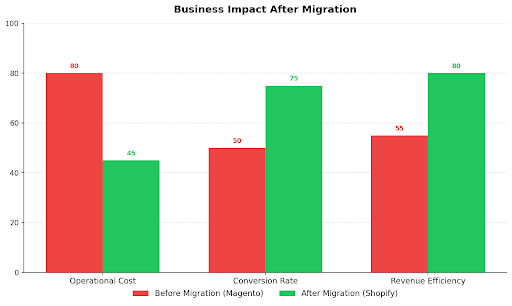
A successful magento to shopify migration is more than a technical shift—it’s a strategic move toward efficiency, scalability, and growth.
By choosing to migrate magento to shopify, businesses can:
- Reduce operational complexity and dependency on developers
- Lower long-term costs and improve margins
- Enhance performance and user experience
- Scale faster with fewer technical limitations
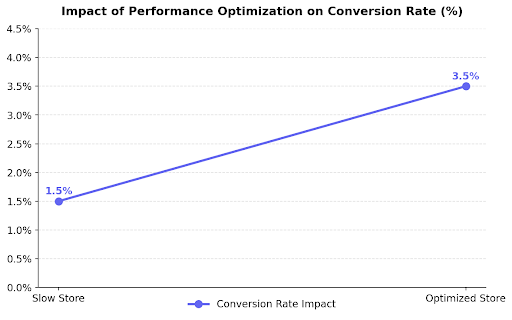
Even small improvements in performance can increase revenue by 10–30% over time.
Partnering with a trusted magento to shopify migration agency like VDCstore or choosing to hire magento to shopify migration expert ensures that your transition is smooth, secure, and optimized for long-term success.
For enterprise-level businesses, magento to shopify plus migration services provide the perfect balance of scalability, flexibility, and performance.
If you’re planning your migration, this is your opportunity to not just move platforms—but to build a stronger, more efficient eCommerce foundation with VDCstore.







0 Comment(s)