 Shopify Migration



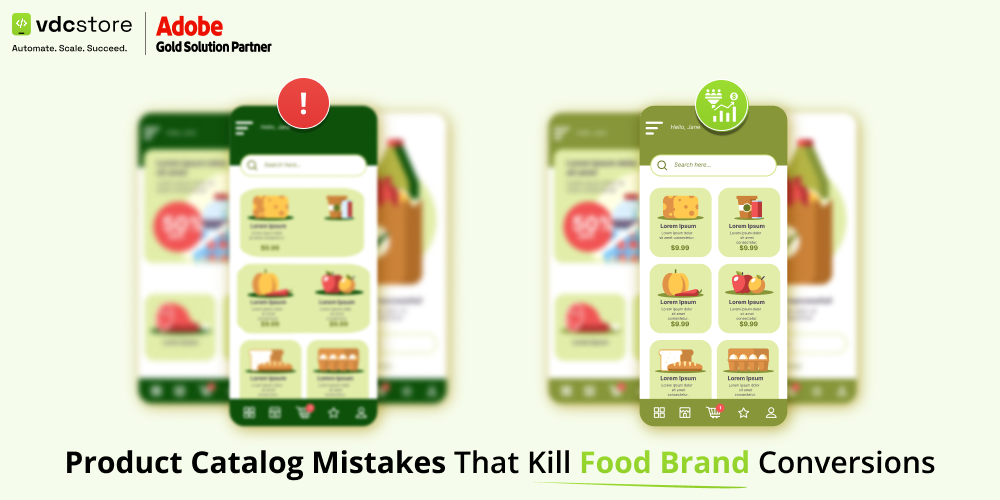
In the food industry, your product catalog isn’t just a list of items, it’s your digital storefront, sales rep, and conversion engine combined.
Whether you’re selling gourmet products, packaged foods, or fresh inventory, one thing is clear: Customers don’t taste first, they browse first.
At VDCstore (Adobe Gold Partner), we’ve seen food brands invest heavily in marketing, only to lose conversions due to poorly structured product catalogs. The truth is brutal, even small catalog mistakes can quietly destroy revenue.
Let’s break down the most critical product catalog mistakes and how to fix them with a performance-first approach.
Why Product Catalog Structure Matters More in Food eCommerce
Product catalogs play a crucial role in shaping customer purchase decisions. With over 2.71 billion ecommerce users , having a well-structured and compelling catalog is more important than ever for influencing buying behavior and driving conversions. Unlike other industries, food eCommerce relies heavily on visual appeal, trust, and clarity. Customers are making decisions based on:
- ingredients and dietary preferences
- freshness and shelf life
- packaging and portion size
- delivery timelines
If your catalog fails to communicate these clearly, users hesitate, and hesitation leads to abandonment.
VDC Store Product Catalog Management Solution
Learn how the VDC Store works with some of the biggest brands in the world.
Book a DemoMistake #1: Poor Product Categorization
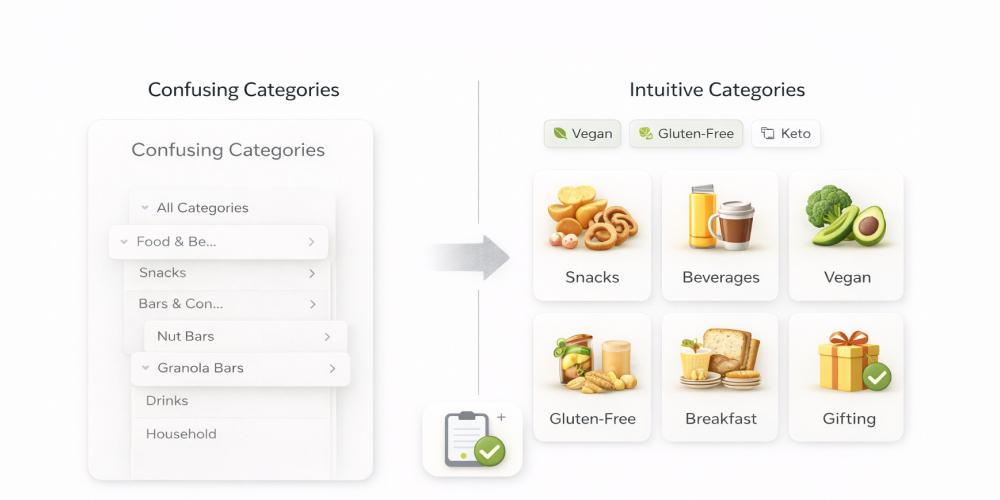
One of the most common issues is overly complex or poorly structured categories that make navigation difficult.
Many food stores either:
- create too many nested categories, making browsing confusing
- or oversimplify categories, making it hard to filter products properly
This creates friction because users can’t quickly find what they’re looking for, especially when browsing on mobile.
How to Fix It
A well-structured catalog should guide users intuitively. This means creating categories based on how customers actually shop, such as dietary needs (vegan, gluten-free), product types (snacks, beverages), or usage occasions (breakfast, gifting).
At VDCstore, we typically restructure catalogs to align with user intent, not internal logic, which significantly improves navigation and engagement.
Mistake #2: Weak Product Descriptions
In food eCommerce , product descriptions are not optional, they are critical for conversion.
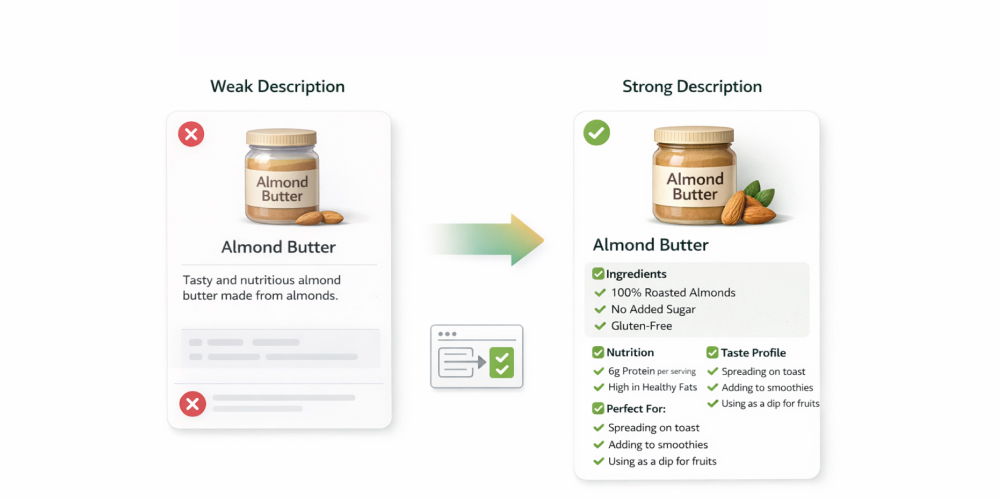
A weak product description often lacks:
- ingredient transparency
- flavor profile explanation
- usage suggestions
- dietary information
This creates uncertainty, and uncertainty kills conversions.
How to Fix It
Strong product descriptions should provide clarity and confidence. Instead of generic text, each product should include detailed information about taste, ingredients, nutritional value, and use cases.
For example, instead of simply stating “Organic Almond Butter,” a high-converting description would explain texture, sourcing, health benefits, and serving suggestions.
At VDCstore, we focus on creating conversion-driven product content that answers customer questions before they are even asked.
Mistake #3: Low-Quality or Inconsistent Images
Food is highly visual. If your product images don’t trigger appetite or trust, users won’t convert.
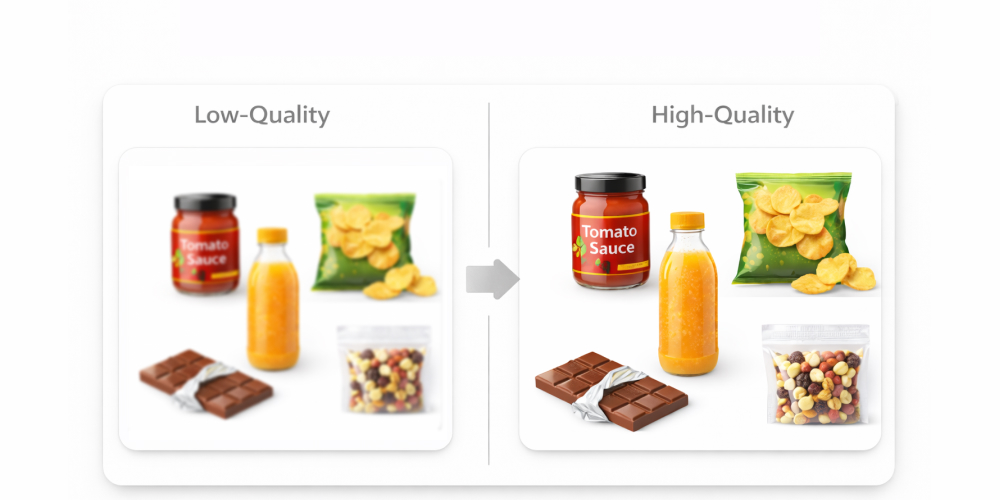
Common mistakes include:
- low-resolution images
- inconsistent backgrounds
- lack of lifestyle or usage images
- no zoom or detail views
This reduces perceived quality and trustworthiness.
How to Fix It
A high-performing food catalog uses a mix of:
- clean product shots for clarity
- lifestyle images to show usage
- close-ups for texture and detail
Consistency across the catalog is key. At VDCstore, we help brands standardize visual presentation to create a premium and trustworthy shopping experience.
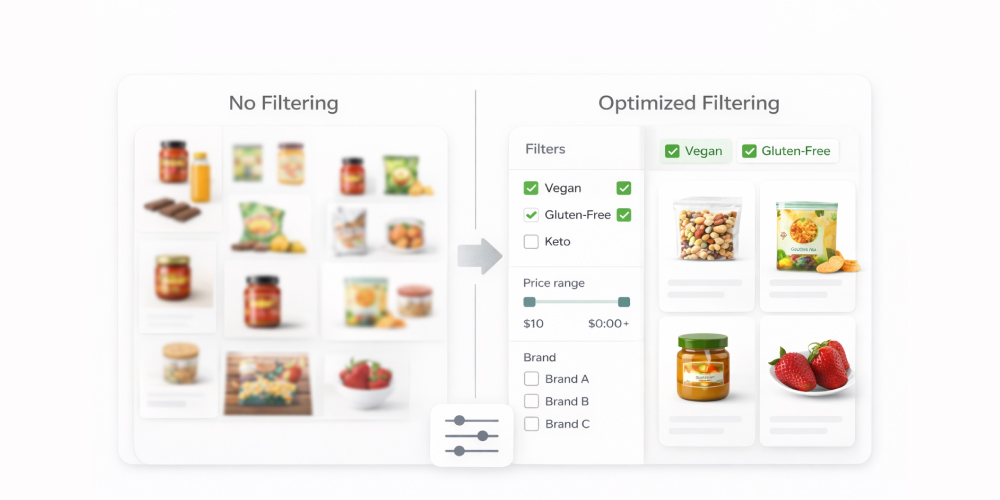
Mistake #4: Missing or Poor Filtering Options
Filtering is one of the most underestimated conversion drivers in food eCommerce.
Users often want to filter products by:
- dietary restrictions (vegan, keto, gluten-free)
- allergens
- price range
- brand or origin
If your catalog doesn’t support this effectively, users are forced to scroll, and most won’t.
How to Fix It
Advanced filtering should be built into the catalog architecture. This includes dynamic filters, fast loading, and clear labeling.
At VDCstore, we implement optimized layered navigation systems that allow users to find exactly what they need in seconds, significantly reducing drop-offs.
Mistake #5: Slow Catalog Performance
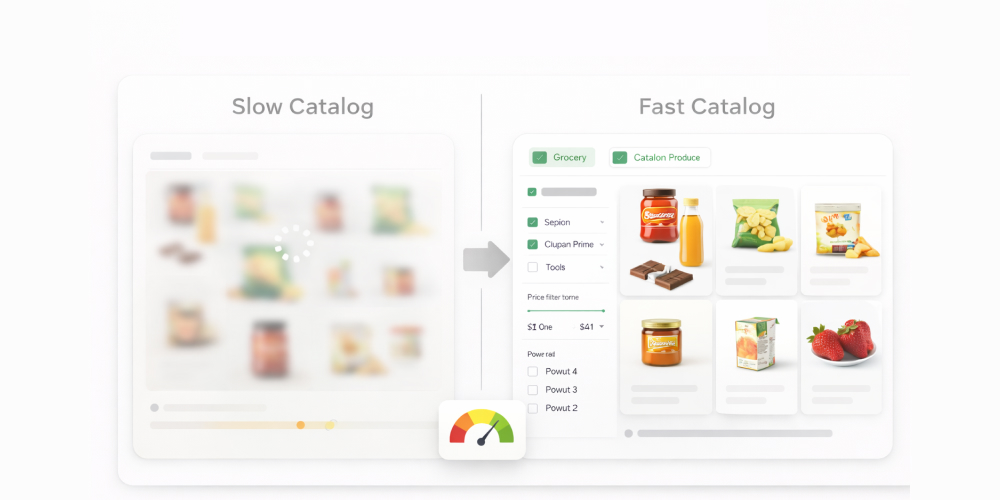
Even the best-designed catalog fails if it’s slow.
Food eCommerce catalogs often include:
- high-resolution images
- large SKU counts
- dynamic filters
If not optimized properly, this leads to slow loading times, especially on mobile.
Performance Impact Comparison
| Factor | Poorly Optimized Catalog | Optimized Catalog |
|---|---|---|
| Page Load Time | 4–8 seconds causing user frustration and early exits | 1–2 seconds enabling smooth browsing |
| Mobile Experience | Laggy scrolling and delayed interactions | Fast, responsive, and seamless |
| Conversion Rate | Lower due to friction and delays | Higher due to improved UX |
| Bounce Rate | High as users abandon quickly | Reduced significantly |
How to Fix It
Performance optimization involves compressing images, reducing unnecessary scripts, and using modern frontend frameworks.
At VDCstore, we prioritize speed-first architecture, ensuring that catalog browsing feels instant and frictionless.
Mistake #6: Lack of Personalization
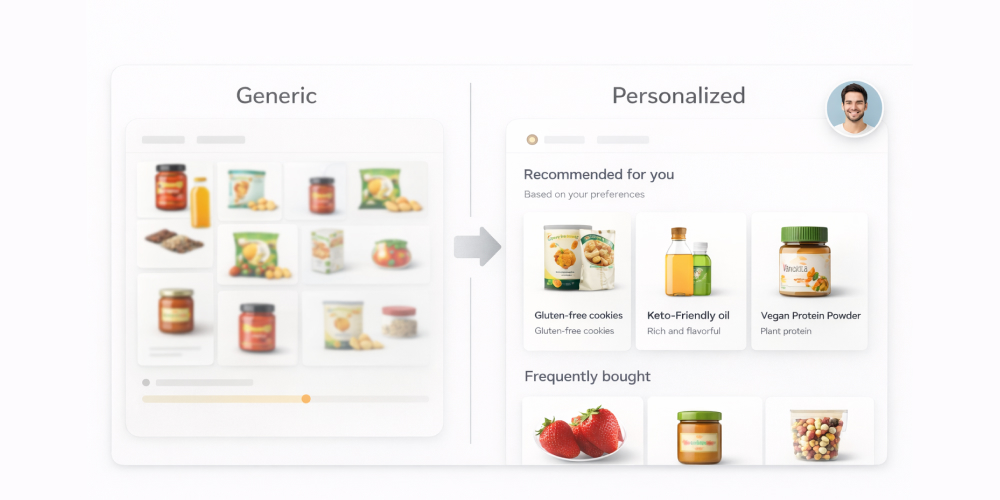
Modern customers expect personalized experiences, even in food shopping.
A generic catalog that shows the same products to every user misses opportunities to increase engagement and conversions.
How to Fix It
Personalization can include:
- recommending products based on browsing behavior
- highlighting frequently purchased items
- tailoring offers based on user preferences
At VDCstore, we integrate personalization strategies that turn static catalogs into dynamic, conversion-driven experiences.
Mistake #7: No Clear Pricing and Packaging Information
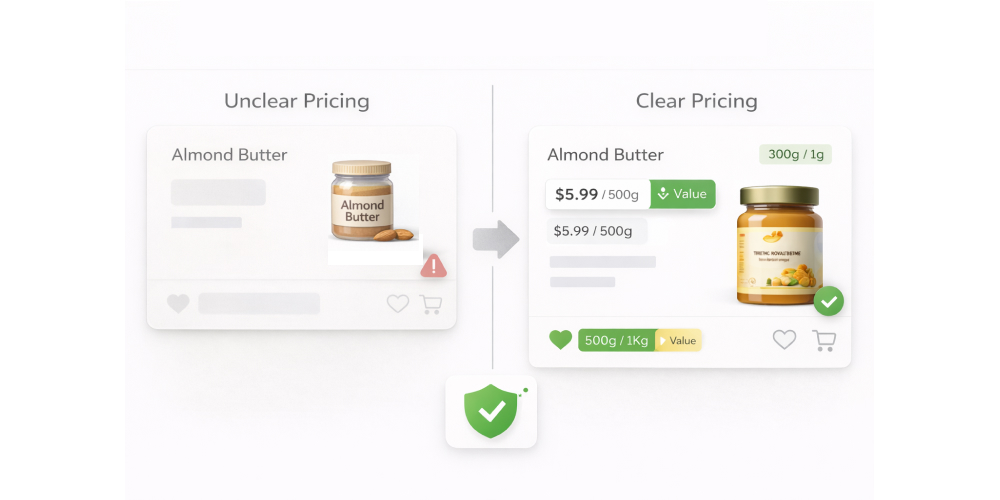
Food purchases are highly sensitive to pricing and quantity clarity.
If your catalog does not clearly show:
- price per unit
- package size
- portion details
customers hesitate or abandon the purchase.
Pricing Clarity Impact
| Factor | Unclear Pricing | Clear Pricing |
|---|---|---|
| Customer Trust | Low due to confusion | High due to transparency |
| Purchase Confidence | Reduced | Strong |
| Conversion Rate | Lower | Higher |
How to Fix It
Every product should clearly communicate pricing, weight, and value. Transparency builds trust and accelerates decision-making.
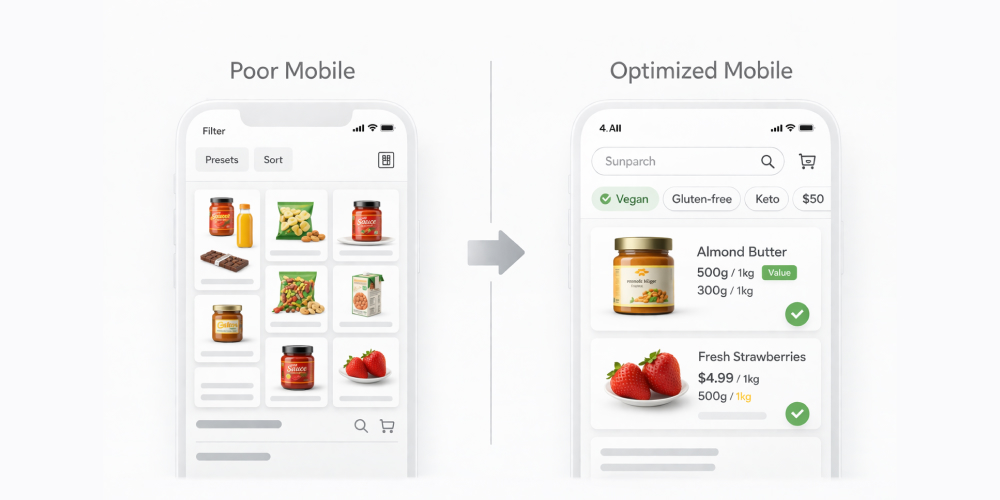
Mistake #8: Ignoring Mobile Catalog Experience
A majority of food eCommerce traffic now comes from mobile devices.
If your catalog is not optimized for mobile, users face:
- difficult navigation
- slow loading
- poor readability
This leads to immediate drop-offs.
How to Fix It
Mobile-first design ensures that product listings, filters, and images are optimized for smaller screens.
At VDCstore, we build catalogs with a mobile-first approach, ensuring smooth browsing and higher conversions across devices.
The VDCstore Approach to High-Converting Food Catalogs
At VDCstore (Adobe Gold Partner) , we don’t treat product catalogs as static data structures. We treat them as conversion systems.
Our approach focuses on:
- restructuring catalogs based on real user behavior
- optimizing performance for speed and scalability
- enhancing product content for clarity and trust
- implementing advanced filtering and personalization
The goal is simple:
reduce friction at every step of the browsing journey
Because in food eCommerce, the faster a customer finds what they want, the faster they convert.
Final Thoughts
Your product catalog is not just an operational necessity — it’s one of your most powerful revenue drivers. And without the right ecommerce website development , even the best products can fail to convert.
Ignoring catalog optimization means:
- higher bounce rates
- lower conversions
- wasted marketing spend
Fixing it with the help of VDCstore, an expert product catalog development company, means:
- better user experience
- stronger customer trust
- higher revenue







0 Comment(s)